League of Girls
Beyond the Game: Amy Laski Is Reimagining What Sport Can Be for Girls
By Tanya Meilleur

Ice Warriors Magazine
What happens when a girl wants to play hockey, but the system has no place for her?
Perhaps she's 14 years old and has never stepped onto the ice. Perhaps she loves the game but also wants to dance, travel, or spend time exploring other interests. Perhaps she's watched her brother play for years, quietly wishing she could experience the same thing, only to discover that the opportunities available to her seem designed for someone who started much younger.
For generations, organized youth sport has largely operated on a familiar model: start early, commit consistently, compete, and progress through increasingly demanding levels of participation.
But what about the girls who simply want to play?
For Amy Laski, founder of League of Girls, that question became the foundation for something much bigger than a hockey program.
The idea emerged from a personal experience. A mother of three daughters, Laski was familiar with the demands of competitive athletics. Her eldest daughter pursued competitive skiing and soccer, while her middle daughter, who loved dance, also wanted to try hockey.
Laski began searching for a recreational hockey program in Toronto that would allow her daughter to play once a week without abandoning her other interests.
She couldn't find one.
What initially appeared to be a simple gap in programming soon revealed something more significant: a sporting structure that offered limited opportunities for girls who wanted to begin later, participate recreationally, or pursue multiple interests without making sport the centre of their lives.
When Laski approached the City of Toronto about securing ice time for a new girls' hockey program, she encountered another obstacle. Existing permit arrangements made accessing ice extraordinarily difficult for new organizations.
Rather than accepting that the opportunity didn't exist, she began building it herself.
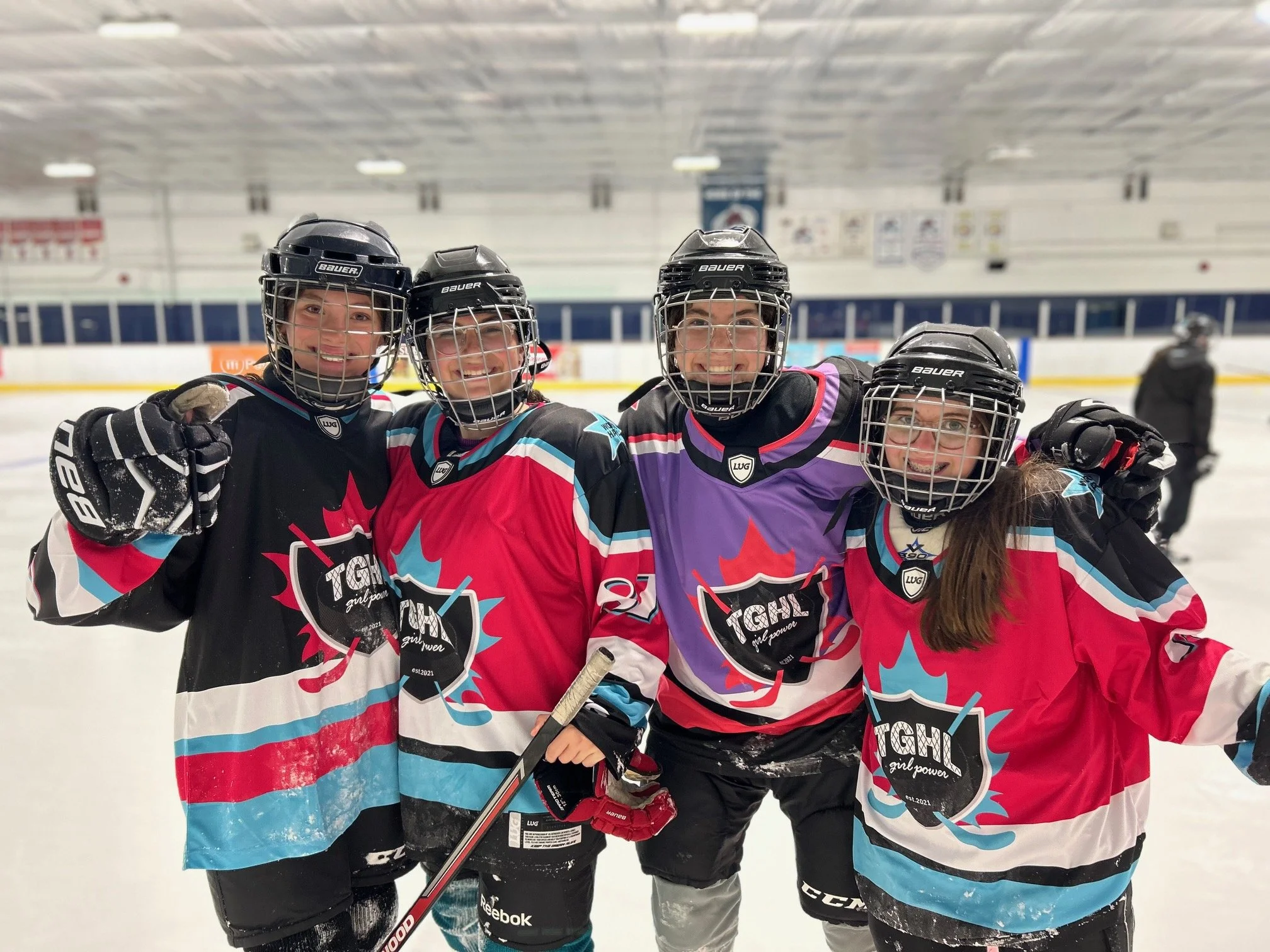
What started as the Tween Girls' Hockey League has since evolved into League of Girls, an initiative challenging conventional ideas about participation, competition, belonging, and what meaningful athletic development can look like.
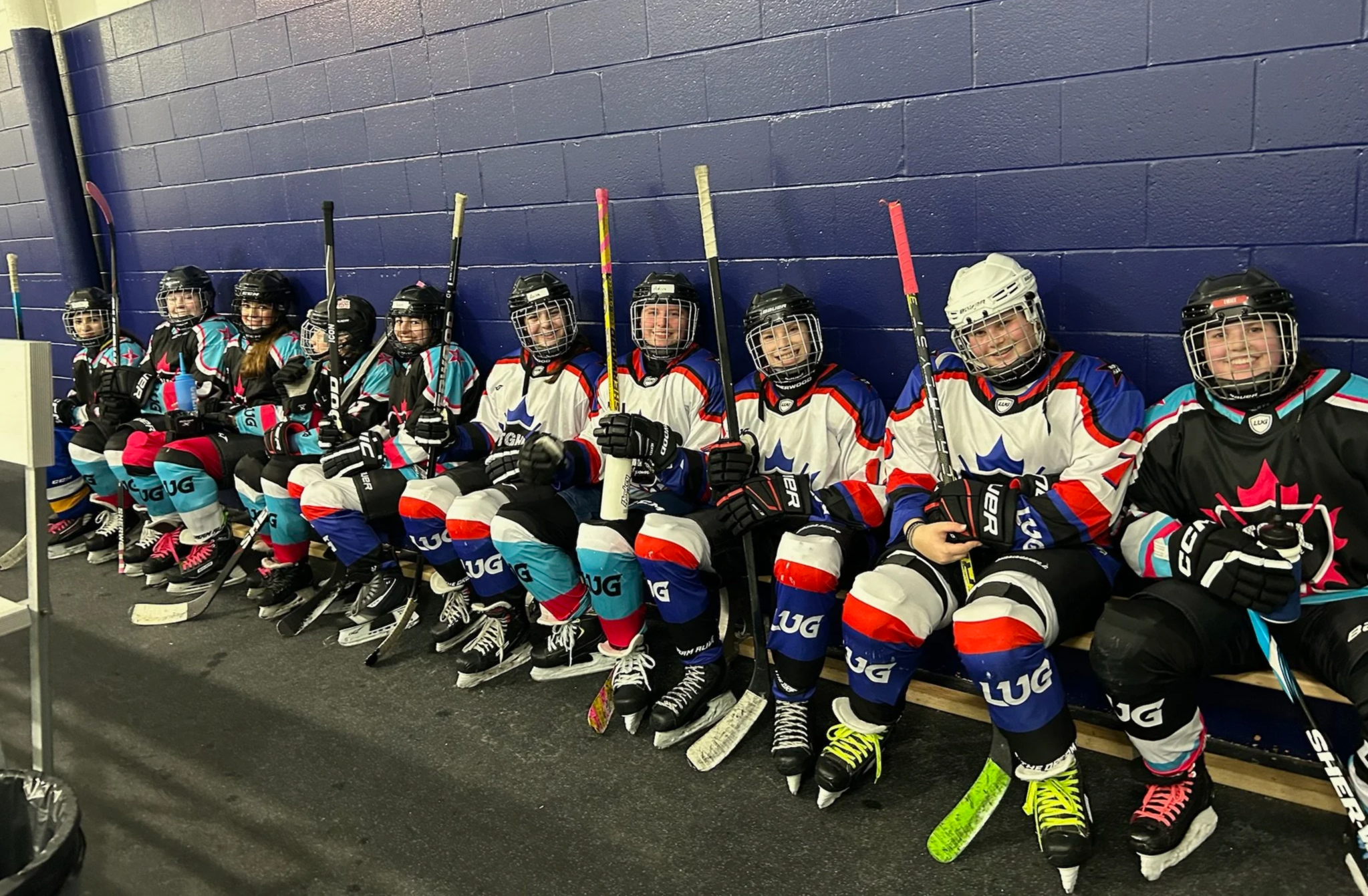
Its approach is intentionally different. Girls are grouped by age rather than athletic ability. Friendships are encouraged. Mistakes are normalized. Skill development matters, but so do courage, resilience, and the willingness to try something unfamiliar.
Perhaps most importantly, girls themselves help shape the experience.
In a sporting culture that frequently measures success through rankings, achievements, and advancement, Laski is asking a different question: What if success simply meant that more girls had a place to play?
Ice Warriors sat down with Laski to discuss the barriers that continue to shape girls' participation in sport, the importance of belonging, and why creating lasting change requires more than encouraging girls to get involved.
“We normalize making mistakes, falling down, and trying again. We want girls to understand that those experiences are a natural part of learning.”

Challenging the Traditional Sporting Model
Ice Warriors: Before League of Girls existed, there was a moment when you recognized that something was fundamentally missing from the way girls experience sport. Can you take me back to that realization? What were you witnessing, and why did it feel important enough to do something about it?
Amy Laski: I have three daughters, and they've had very different experiences with sport. My eldest has been involved in competitive skiing and soccer, so I've seen firsthand that there are established pathways for girls who want to train intensely and compete at a high level.
But my middle daughter loved dance and also wanted to play hockey. She was around 10 or 11 at the time, and I was looking for something that would allow her to play once a week while continuing to pursue her other interests. I was shocked that in Toronto, one of the biggest hockey markets in North America, I couldn't find a program that offered that experience.
I decided to start one myself, but when I contacted the City of Toronto about obtaining ice time, I was told that existing contracts had to be honoured and there was essentially no opportunity for a new organization to get access. That's when I realized the problem was much bigger than finding a hockey program for my daughter. There were structural barriers preventing new opportunities from being created in the first place.
I knew I had the ability to advocate for change, and I also recognized that many families encountering those same barriers might simply accept the rejection because they didn't have the resources or capacity to challenge it. So I decided to pursue both: creating the hockey program and challenging the policies that made access so difficult.
Ice Warriors: You built something that challenged a long-established model of youth sport. Was there a point when you questioned whether the problem was the system itself, rather than the girls who were choosing to leave it?
Amy Laski: I realized fairly early that the system itself was the problem. Initially, I approached Hockey Canada and the Ontario Women's Hockey Association about creating a late-entry option for girls. The traditional hockey pathway generally serves those who begin playing at a young age and are prepared to commit multiple times a week. But what about the girl who wants to start at 13 or 14? Or the girl who wants to play hockey once a week because she also loves dance, soccer, or other activities? Those girls deserve opportunities too.
Eventually, I started questioning why we were building programs around an existing model rather than asking girls what they actually wanted. What if we started from scratch? What would girls want their hockey experience to look like? What would make it fun and challenging? What kinds of behaviours and achievements should be recognized? Instead of assuming we knew what girls needed, we began using their interests and experiences to guide the programming. That became the foundation of League of Girls.
Creating an Environment Where Girls Belong
Ice Warriors: There’s a powerful difference between being allowed to participate and genuinely feeling that you belong. What does belonging look like in practice, and how do you create an environment where a girl feels valued before she’s demonstrated any athletic ability?
Amy Laski: Belonging starts before a girl ever steps onto the ice or the court. It's about creating a welcoming environment, knowing people's names, and making sure girls feel comfortable and connected to the people around them. We've learned that relationships are incredibly important. Having a friend or even one familiar face can make an enormous difference in whether a girl feels comfortable participating.
We pay attention to how we represent our programs. When girls visit our website or see our videos, they're not just seeing highly skilled athletes performing perfectly. They're seeing real girls learning, falling down, missing the ball, and having fun. We want them to recognize themselves in those experiences.
Another important difference is that we group girls according to age rather than athletic ability. A 16-year-old who is learning to skate might have the same technical ability as a much younger child, but socially, those two girls have very different needs. For us, social connection takes priority. Because we maintain a high ratio of coaches to participants, we can meet girls at their individual skill levels while still allowing them to develop friendships with peers their own age. We want every girl to feel that she belongs from the moment she arrives, regardless of how much experience she has.
Ice Warriors: How do you challenge girls to grow, develop skills and overcome difficulties without recreating the same performance pressures you’re trying to move away from?
Amy Laski: A lot of it comes down to what you choose to recognize and reward. We normalize making mistakes, falling down, and trying again. We want girls to understand that those experiences are a natural part of learning.
We also recognize progress. If a girl can suddenly skate backwards when she couldn't do it two weeks earlier, that's something worth celebrating. Every week, we introduce a word or quality for the girls to think about, such as resilience or courage. Those conversations help reinforce that growth involves more than developing technical skills.
We're also piloting a recognition system inspired by Girl Guide badges, but using hair elastics instead. The idea is to recognize both skill development and qualities such as teamwork and perseverance. It's about rewarding progression and character rather than simply achievement.
We've also challenged some of the traditional structures of organized sport. We don't have formal teams or standings, and the girls don't mind at all. They still learn, improve, challenge themselves, and enjoy playing. It demonstrates that you can create a meaningful sporting experience without making competition or rankings the centre of everything.
Ice Warriors: Female coaches and mentors are central to your programming. Beyond teaching athletic skills, what do you believe changes when young girls consistently see women occupying positions of leadership, authority and expertise?
Amy Laski: I think representation is incredibly powerful. When I was growing up, I didn't know another girl who played hockey. I certainly never imagined there would be a professional women's hockey league. Now, for some girls, the PWHL is simply part of what they know hockey to be. That's an extraordinary change.
But representation also matters at the community level. Our female coaches help create that connection between what girls see professionally and what they can imagine doing themselves. They see young women who are skilled athletes, coaches, and referees. They begin to recognize that there are different ways to participate and contribute to sport. A girl might decide she doesn't want to become a coach, but perhaps she'd like to referee. Or she might see herself taking on a leadership role she hadn't considered before. Having those examples directly in front of them helps make those possibilities real.
“I knew I had the ability to advocate for change, and I also recognized that many families encountering those same barriers might simply accept the rejection because they didn't have the resources or capacity to challenge it. So I decided to pursue both: creating the hockey program and challenging the policies that made access so difficult.”
Confronting the Barriers to Participation
Ice Warriors: Your fight for equitable ice time exposed some of the structural barriers facing girls’ hockey. What did that experience reveal to you about how inequality can become embedded in policies and traditions that appear neutral on the surface?
Amy Laski: In this case, the problem wasn't necessarily hidden. It had simply become an accepted way of doing things that very few people were willing to challenge. Hockey is deeply entrenched in Toronto, and ice time is an extremely limited resource. Existing organizations hold permits that are renewed year after year, making it extraordinarily difficult for new programs to gain access.
But if we're serious about creating equitable opportunities, we have to question a system that effectively prevents new participants from accessing the facilities they need. You can't change who participates in sport if the groups you're trying to reach have no realistic way to get onto the ice. And offering whatever time happens to be left over isn't necessarily a solution. A recreational program for teenage girls isn't going to succeed if the only available ice is at 11 o'clock at night, far from where families live.
We also need to ask better questions about how facilities are allocated. Who currently has access? Who wants to participate but can't? Where do those families live, and what would make participation realistic for them?
Ice Warriors: We’ve seen extraordinary momentum around professional women’s sports, with growing visibility, investment and public enthusiasm. Do you worry that we’re celebrating progress at the highest levels while overlooking the barriers girls still face at the grassroots level?
Amy Laski: I don't think we need to choose between celebrating professional women's sports and addressing the barriers at the grassroots level. We absolutely should be celebrating the incredible progress we're seeing. It's amazing. But now that girls can see these athletes and imagine themselves participating, we need to make sure they actually have opportunities to do so.
A girl might be 14 years old and feel that she's already missed her chance because she didn't start playing when she was four. We need to change that. There should be accessible opportunities for girls to begin participating at any age, regardless of whether they have ambitions to compete professionally. The visibility and excitement around women's sports are creating tremendous momentum. We need to ensure there are meaningful opportunities at the community level for girls who are inspired to get involved.
Ice Warriors: You’ve challenged the idea that girls simply need more encouragement to participate. What responsibilities do sporting organizations, municipalities and policymakers need to accept instead of placing the burden on girls and their families?
Amy Laski: I think organizations need to recognize that the interest is already there, but so are the barriers. They also need to understand that girls may want to participate differently than the traditional sporting model assumes. Most established pathways are designed around increasing levels of commitment and competition. You begin recreationally, develop your skills, and are encouraged to move toward more intensive participation.
But that's not the only legitimate pathway. There should also be opportunities for girls who want to improve, challenge themselves, and become more confident without necessarily increasing the amount of time they dedicate to a sport. We tend to measure success by moving participants further up the competitive ladder rather than simply keeping them engaged in physical activity. I'm interested in creating something that works across different sports, with a consistent understanding of how tween and teenage girls want to participate. The focus should be on making sport accessible, enjoyable, and sustainable throughout their lives.
Redefining What It Means to Succeed
Ice Warriors: If you could sit down with a teenage girl who has convinced herself she’s simply not athletic enough, talented enough or confident enough to participate in sport, what would you want her to understand about herself?
Amy Laski: I would encourage her to let go of whatever expectations she has placed on herself, or that other people may have placed on her.
Just give yourself permission to play, to try something new, and to have fun.
We live in such an achievement-oriented society that we often overlook the value of simply trying. Trying something new takes courage, especially when you're uncertain about your abilities or worried about how other people might perceive you. But trying doesn't have to be a step toward some larger achievement. Sometimes the experience of trying is valuable in itself. You might discover something you love. You might realize it isn't for you. Either way, you've had an experience, learned something, and given yourself an opportunity you wouldn't otherwise have had.
I would want her to know that she doesn't have to be an athlete to participate in sport. She just has to be willing to give it a try.
Ice Warriors: Imagine we’re having this conversation 20 years from now, and League of Girls has helped fundamentally change how girls experience sport in Canada. What would you hope looks different, and what would make you feel that the work you’ve done truly mattered?
Amy Laski: Ultimately, I'd love to see a generation of tween and teenage girls who are more physically active because they know there's a place for them in sport. Right now, those opportunities don't consistently exist across the sporting system. I want girls to grow up knowing they can participate, regardless of when they start, what their abilities are, or how seriously they want to pursue a particular sport. I want them to feel that sport is something they can enjoy throughout their lives. Because right now, sport isn't for everybody. And that's what I'd like to see change.
“Our female coaches help create that connection between what girls see professionally and what they can imagine doing themselves. They see young women who are skilled athletes, coaches, and referees. They begin to recognize that there are different ways to participate and contribute to sport.”
More Than a League
At its heart, League of Girls is challenging an assumption that has shaped organized sport for generations: that participation must eventually lead somewhere.
Toward a higher level. A stronger team. A championship. A scholarship. An increasingly demanding commitment.
Laski's work suggests that there is another destination worth pursuing.
A girl who discovers she loves hockey at 15. A teenager who learns that falling down doesn't mean she doesn't belong. A young athlete who develops the confidence to try something unfamiliar. A friendship that makes showing up each week something to look forward to.
These experiences may never appear on a scoreboard, but their significance can extend well beyond the playing field.
As League of Girls looks toward expanding into additional sports and communities, its greatest opportunity may be in demonstrating that meaningful athletic development doesn't require every child to follow the same path.
And at a time when women's professional sports are experiencing extraordinary visibility, Laski's message offers an important reminder: inspiration matters, but so does access.
Because the future of women's sport isn't shaped only by the athletes who reach the highest levels.
It's also shaped by every girl who is given the opportunity to begin.
And sometimes, changing the game begins with making room for someone who was never given the chance to play.